

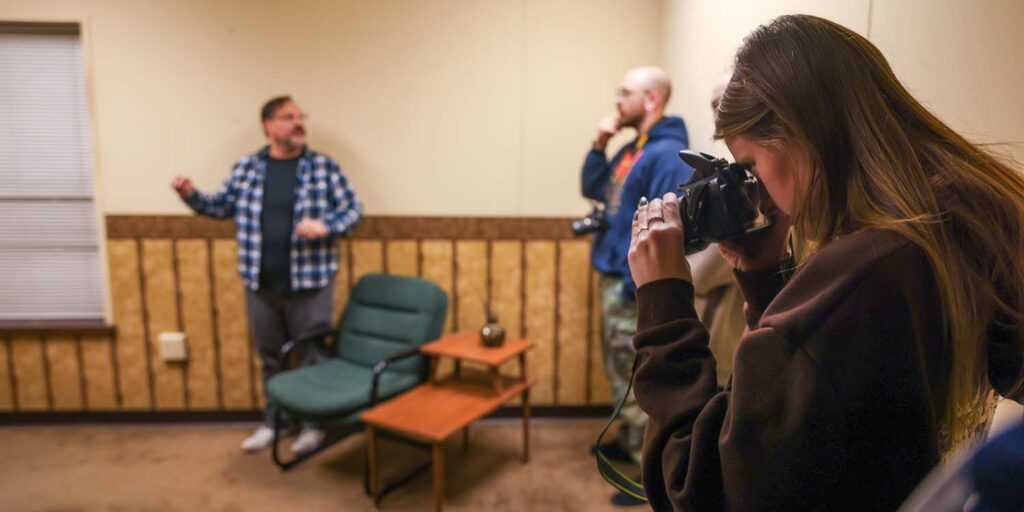
On Tuesday evenings from 6:30 to 9 p.m., the lights are on in MNU’s Criminal Forensics Lab—and it’s bustling with activity. Inside the lab, seven students cluster around a staged crime scene, carefully positioning cameras and adjusting lenses. Their career goals range from local police work to the FBI, social work and other law enforcement-related professions, but tonight they share a single focus: documenting evidence the right way.
The Criminal Forensics class is intentionally hands-on. Rather than just hearing or reading about procedure, students practice it. During a recent class session, they learned how overall, mid-range and close-up photographs each serve a different purpose in court. They discussed how improper scale placement or camera angles can distort a piece of evidence—and potentially weaken a case. Then they practiced the correct technique themselves.
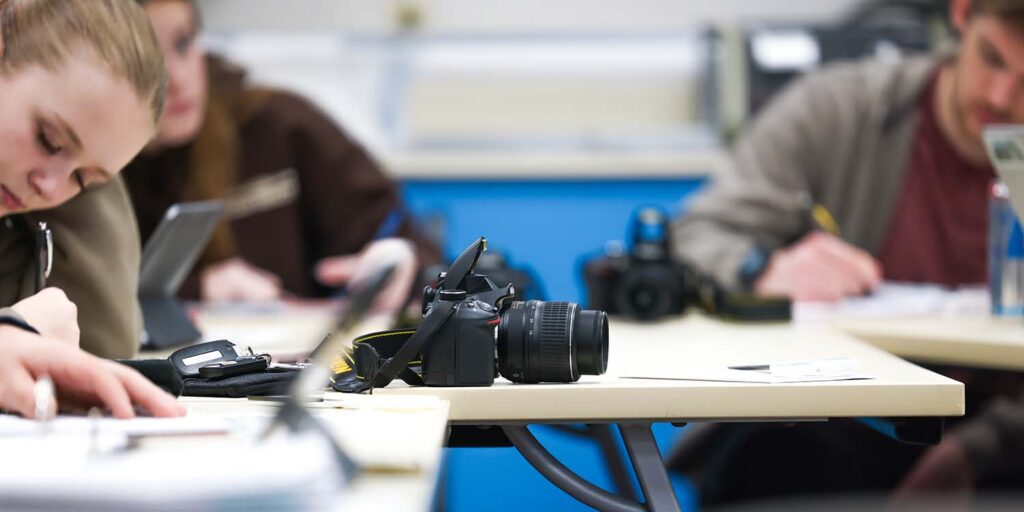
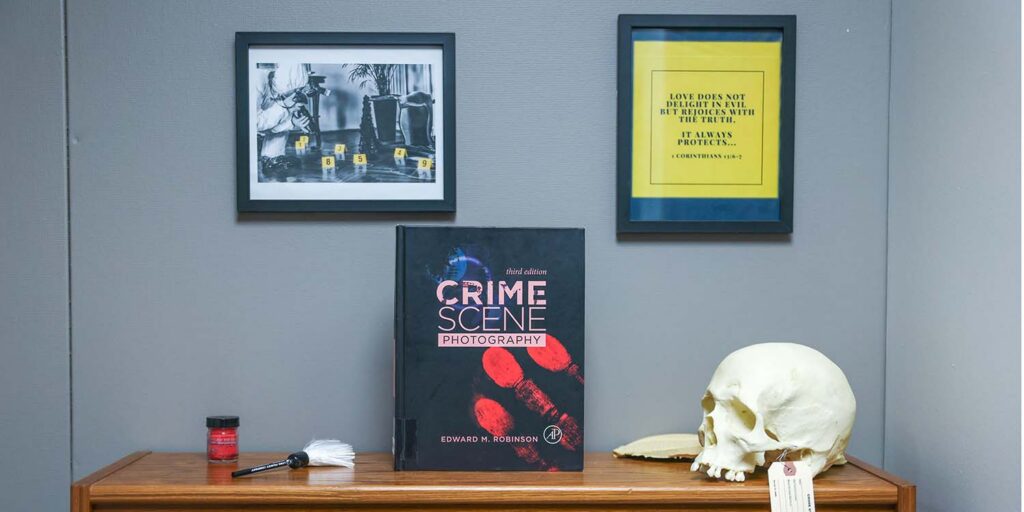
The course meets in MNU’s Criminal Forensics Lab, which opened in 2024 and continues to expand its equipment and capabilities thanks to generous donors. The space includes a two-way mirror for observation, fingerprinting tools, specialty lighting, a comparison microscope for trace evidence and a dedicated “crime scene” room where students practice securing a scene, logging entry and exit, sketching, measuring and processing evidence.
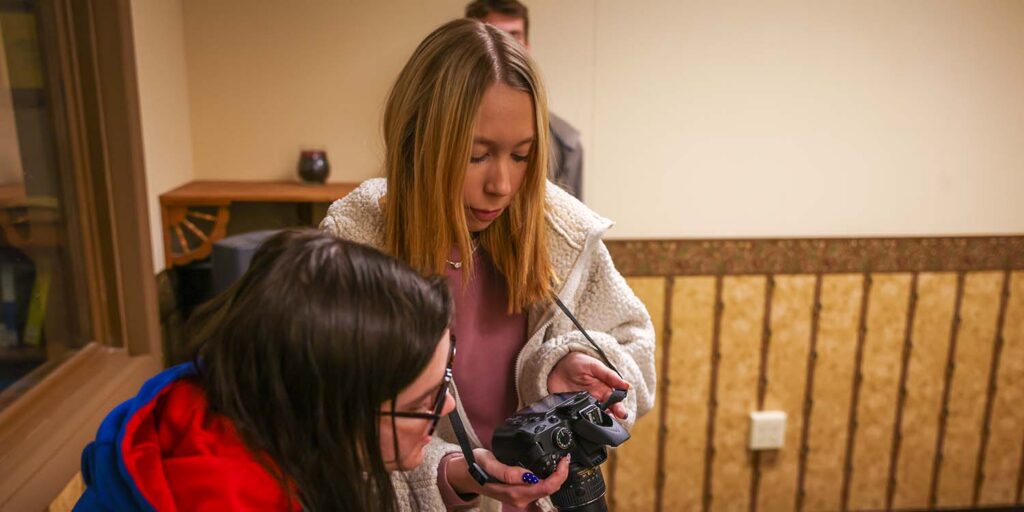
Taking photos at the staged crime scene in MNU’s Criminal Forensics Lab.
Later in the semester, the class learns how to identify, collect and preserve fingerprints from crime scene evidence. Collected evidence is placed in the lab’s superglue fuming chamber, which is then heated. Fumes from the superglue reveal fingerprints on the object. Students also learn to use a comparison microscope to process trace evidence, such as fibers. They also gain experience with forensic light sources (ultraviolet flashlights and green lights) at different wavelengths, which cause biological fluids, fibers, and treated fingerprints to fluoresce and become visible.
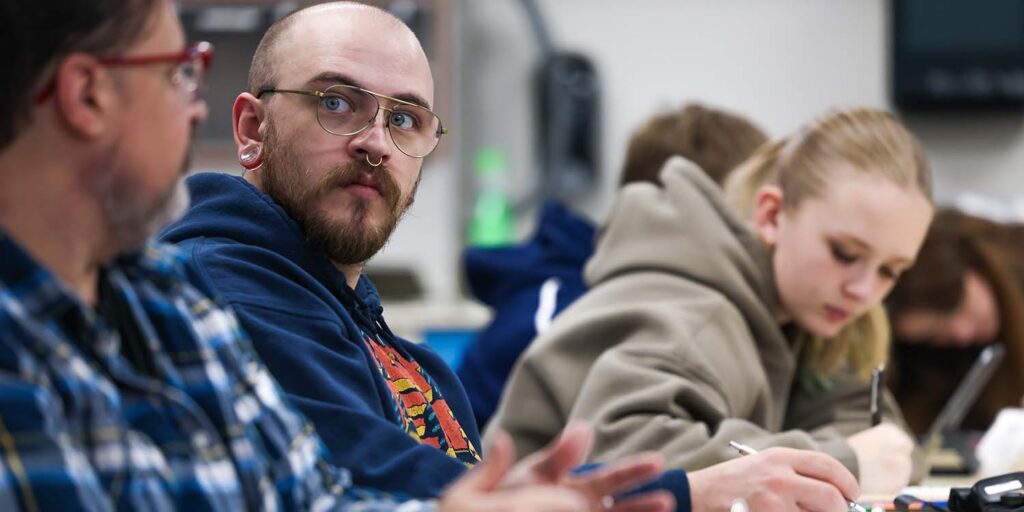
The course instruction adheres to standards recognized by SIRCHIE, an industry leader in forensic tools and education, to ensure students are learning current, field-relevant techniques. Adjunct instructors working in law enforcement and an advisory board composed of professionals from agencies across the region provide ongoing insight into the curriculum.
Field trips to local police departments and courtrooms further connect classroom learning to real-world applications. By the time they graduate, criminal justice majors won’t just recognize the equipment used in investigations; they will have trained with it, building confidence and competence for their future careers. Learn more about the Criminal Justice major at MNU.
