

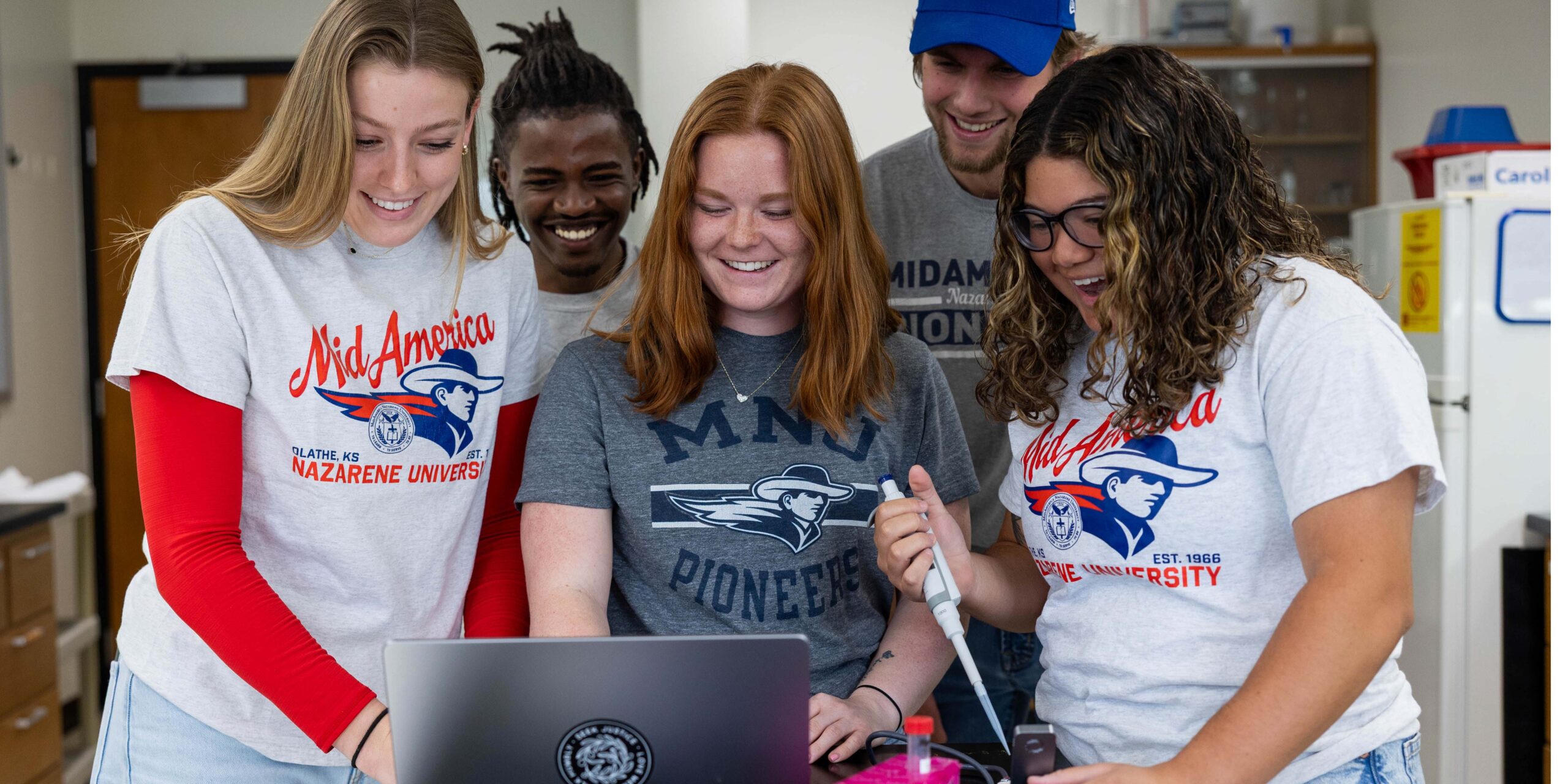
In a busy corner of a MidAmerica Nazarene University science lab, students are helping solve a problem that affects food supplies worldwide. With guidance from the Barkman Endowed Professor of Science, Dr. Rion Taylor, they are sequencing the metagenome of honeybee hives to learn how to protect these vital pollinators from one of their deadliest threats: Varroa destructor mites.
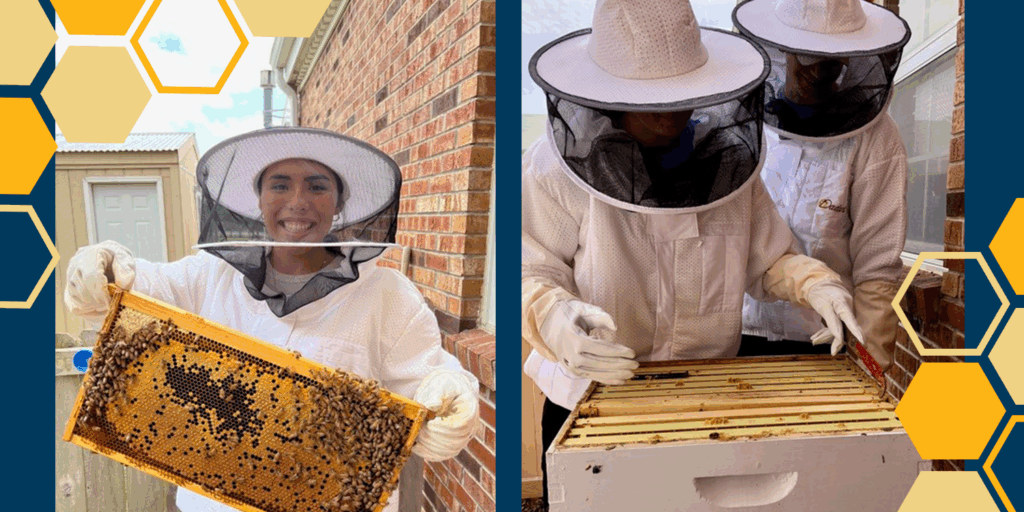
Honeybees are among the world’s essential pollinators, responsible for about one-third of the food we eat. However, in recent years, bee populations have declined, partly due to the parasitic Varroa mite, which weakens and can ultimately destroy entire colonies. By studying metagenomic DNA, the researchers hope to identify genetic markers linked to mite resistance or vulnerability—information that could one day lead to more effective treatments or breeding strategies.
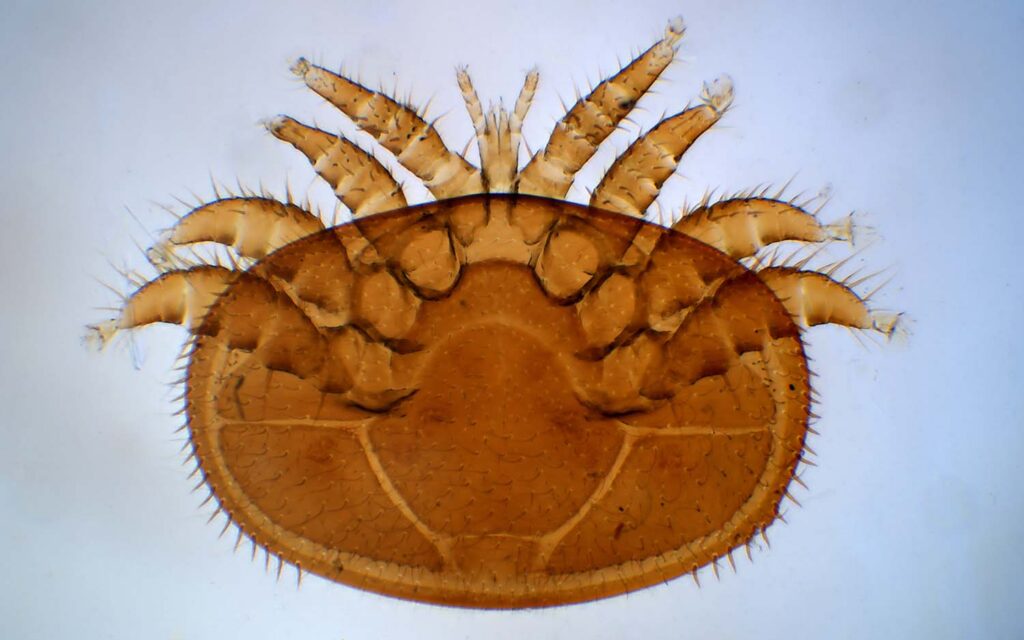
“The mites feed on honeybees’ fat body and hemolymph, which is similar to our liver and blood,” Taylor says. “They also transmit a host of diseases that contribute to colony collapse. It can be difficult to treat a mite-infested hive. As mites and honeybees are closely related from a phylogenetic perspective, finding treatments that target just the mites is challenging.”
Research Significance
By sequencing the metagenome (study of genetic material from an environmental sample) of honeybee hives the students in Taylor’s research group hope to help find a way to target treatment that will harm the mites but not the bees. Taylor says there are medications that treat the infestation, but mites are becoming resistant to them.
“We want to see if there are any differences between the bacteria that the honeybees have associated with them and the bacteria that the mites have,” Taylor says. “If the mite has bacteria that it needs to survive and the honeybee does not have that bacteria, we can target the mite’s bacteria with antibiotics to kill that specific bacteria, thus killing the mite. This approach is known as selective toxicity.”
Making Advanced Research Possible at MNU
At many small universities, the kind of DNA sequencing underway in Dr. Rion Taylor’s lab would be out of reach. Until recently, such technology was prohibitively expensive—often requiring institutions to outsource samples to large sequencing facilities, which meant delays and lost educational opportunities.
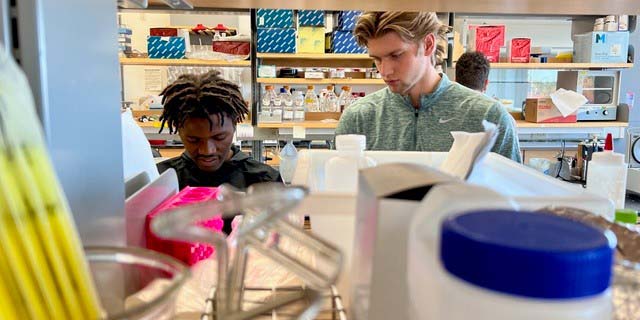
“Just a few years ago, you’d need $250,000 to $400,000 just to get started,” said Dr. Taylor. “Now the equipment is more affordable, but the training and expertise still aren’t easy to come by. That’s what makes this experience so remarkable for our students.”
Thanks to generous support from the Barkman family, longtime MNU donors, the university was able to acquire sequencing equipment and provide the training needed to use it effectively. Dr. Taylor and two students traveled to the University of Wisconsin–Madison to work with one of the top bioinformatics labs in the country—an opportunity that equipped the students to analyze the sequencing data themselves. The funding also made it possible to bring a DNA sequencing expert to MNU’s campus to train students and faculty on the sequencing process.
This rare combination of resources, mentorship, and real-world experience allows MNU undergraduates to engage in meaningful genetic research—something typically reserved for graduate students at large research institutions.
Benefits Beyond Today
Taylor has more plans to implement DNA sequencing in other science classes and research projects. He thinks the technology may also be used to benefit students in different fields. For example, MNU’s criminology students might be able to learn first-hand about how DNA sequencing works and gain insight into its uses for solving crimes.
As the students and Taylor make progress in their DNA sequencing project, they hope their work contributes to the growing body of research aimed at protecting honeybees. One day, this work may help beekeepers build more resilient hives, which can ultimately contribute to the diversity and sustainability of the global food supply.

Learn about MNU science opportunities at mnu.edu/undergraduate-stem-studies.
